
| 货号 | 包装规格 | 操作 |
|---|---|---|
| MBD0047-50UL | 50 μL |
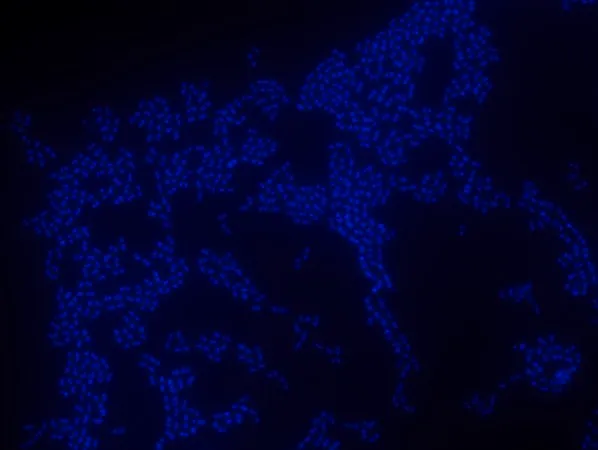
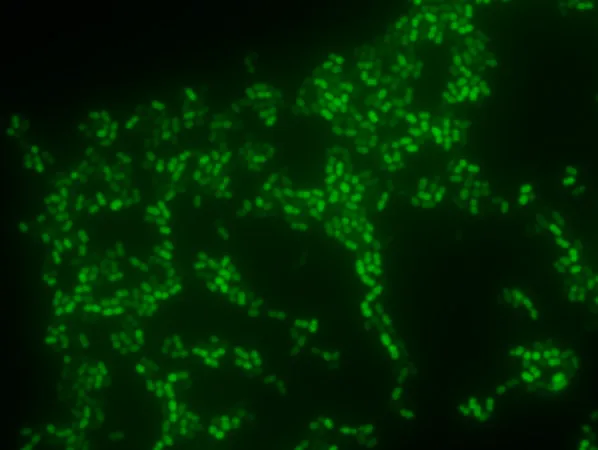
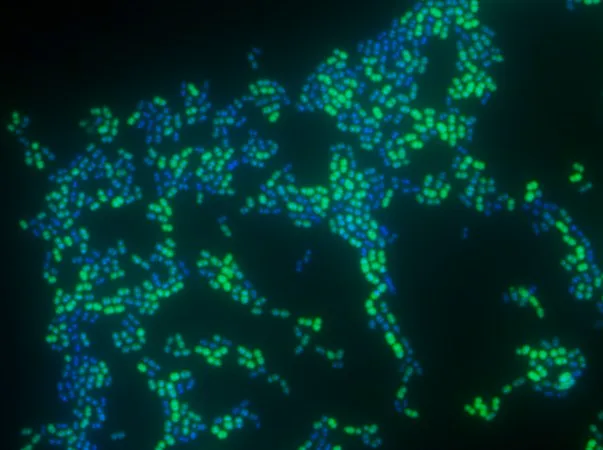
Fluorescent In Situ Hybridization technique (FISH) is based on the hybridization of fluorescent labeled oligonucleotide probe to a specific complementary DNA or RNA sequence in whole and intact cellsPMID 30418568. Microbial FISH allows the visualization, identification and isolation of bacteria due to recognition of ribosomal RNA also in unculturable samplesPMID 12831908. FISH technique can serve as a powerful tool in the microbiome research field by allowing the observation of native microbial populations in diverse microbiome environments, such as samples from human origin (bloodPMID 19797464 and tissuePMID 28912244), microbial ecology (solid biofilmsPMID 31782619, aquatic systemsPMID 12732568) and plantsPMID 30852707. It is strongly recommended to include positive and negative controls in FISH assays to ensure specific binding of the probe of interest and appropriate protocol conditions. We offer positive (MBD0032/33) and negative control (MBD0034/35) probes, that accompany the specific probe of interest. Enterococcus faecium probe specifically recognizes E. faecium cellsPMID 30852707,. E. faecium a gram-positive bacterium and is a cause of a variety of infections, including endocarditis, urinary tract infections, prostatitis, intra-abdominal infection, cellulitis, and wound infection as well as concurrent bacteremiaPMID 24649504. Studies have shown that E. faecium is highly resistant to multiple antibiotics and that vancomycin-resistant Enterococcus faecium (VRE) can be asymptomatically carried by healthy people, which can hamper hospitals’ attempts to control the spread of the bacteria. Over the past two decades, Enterococcus faecium has emerged as a leading cause of multidrug-resistant enterococcal infection in the United States. E. faecium has a high antibiotic-resistance with more than half of its pathogenic isolates expressing resistance to vancomycin, ampicillin, and high-levels of aminoglycosidesPMID 24649504.
荧光原位杂交(FISH)探针,识别屎肠球菌细胞
可视化、鉴定和分离屎肠球菌细胞。观察不同微生物组环境中的天然屎肠球菌细胞群。在细菌混合群中特异性、灵敏性和稳健性鉴定屎肠球菌。特异性、灵敏性、和稳定的鉴定,即使在样品中的屎肠球菌丰度很低的情况下,FISH也可以通过避免污染细菌的检测完成基于PCR的检测方法。屎肠球菌的形态学,并允许研究生物膜结构。在临床样品中鉴定屎肠球菌,如肿瘤和脑组织(例如福尔马林固定石蜡包埋(FFPE)样品)、唾液和口腔以及医疗设备(如牙科植入物和声音假体)。在其自然栖息地检测屎肠球菌的能力是研究宿主-微生物组相互作用的必要工具。
| 英文名称 | Enterococcus faecium FISH probe – ATTO 488 |
| NACRES | NA.54 |
| UNSPSC | 41105500 |
| 技术 | FISH:适用 |
| 荧光 | λ ex 504 nm; λ em 521 nm |
| 运输状态 | 干冰 |
| 储存温度 | −20°C |
| 质量等级 | 200 |
| 包装规格(货号 MBD0047-50UL) | 50 μL |